L’essentiel à retenir :
Le storing toys efficace repose sur des solutions variées telles que les boîtes hermétiques et les unités modulables, qui optimisent l’espace disponible tout en assurant la protection des jouets contre la poussière et l’humidité. En combinant rangement sous-lit et bacs transparents étiquetés, on limite le désordre et facilite l’accès aux jouets. La sécurité reste primordiale avec la fixation des meubles anti-basculement pour les zones de jeux actives.
Où ranger efficacement les jouets quand l’espace manque toujours dans la maison? Le désordre persistant vient souvent d’un manque de stratégies adaptées à chaque type d’objet et environnement. Trouver un équilibre entre accessibilité et dissimulation améliore non seulement la praticité mais aussi le confort visuel des pièces partagées. Faire le choix de solutions adaptables et sécurisées simplifie la gestion quotidiennement tout en incitant les enfants à participer au rangement. Cette approche permet de transformer chaque coin en zone de jeu fonctionnelle et bien organisée.
Storing toys: box-based storage ideas
Dust-proof boxes with lids
One of the best ways for storing toys neatly is by using dust-proof boxes with lids. These boxes protect toys from dirt, dust, and moisture, keeping them clean and ready to play with whenever needed. Look for boxes made of sturdy, BPA-free plastic for durability and safety. They are also stackable, allowing you to maximise vertical space.
For larger or oddly shaped toys, such as ride-ons or bulky plushies, using bigger boxes or custom containers can be a practical solution since standard boxes might not accommodate them effectively. Always check that the lids close securely to prevent any mess and keep pests away. Fixing these storage units to walls or floors can also prevent accidental tipping, improving safety in active play areas.
Fabric vs plastic bins
Fabric and plastic bins are both popular options for toy storage, but they serve different needs. Fabric bins are lightweight, often foldable, and come in various colours and patterns that can complement a room’s decor. They’re perfect for organizing soft toys and smaller items. On the other hand, plastic bins offer sturdiness, easy cleaning, and often come with lids for protection.
Considering the impact ecological factors is essential. Fabric bins, especially those made from natural or recycled materials, tend to be more environmentally friendly and less toxic compared to plastic options. Choosing durable, non-toxic fabrics or BPA-free plastics helps create a safer play environment while being mindful of sustainability.
Labeling for quick finds
Labeling storage boxes is key to an organised toy area. Whether your bins are fabric, plastic, or cardboard, clearly labeled containers make it easy to locate toys quickly and teach kids where everything belongs. You can use words, pictures, or colour codes depending on your child’s reading level.
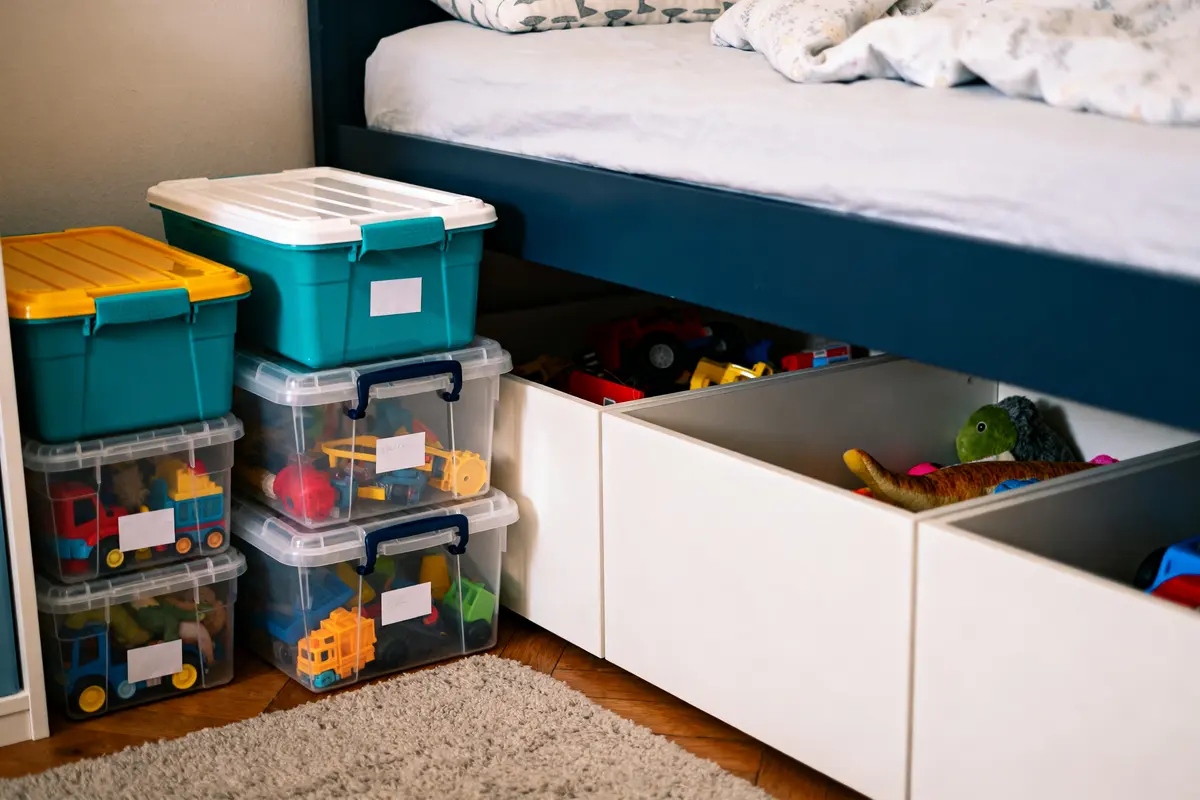
Labels should be placed visibly on the boxes’ front or top. Transparent boxes combined with labels are especially helpful because children can instantly see the contents, reducing time wasted rummaging through toys. Labeling also supports efficient sorting and quick tidying, making storage more user-friendly for everyone in the household.
Under-bed and cube storage for clutter
Under-bed drawers and crates
Under-bed storage is a fantastic use of often wasted space for storing toys. Drawers and crates on wheels slip easily beneath beds, making toys accessible yet out of sight. These are ideal for small spaces or shared bedrooms.
Opt for shallow, dust-resistant containers that fit the under-bed clearance well. Adding handles or clear windows can help retrieve toys without pulling everything out. When dealing with bulkier toys, opt for larger crates with reinforced sides.
Modular cube units (KALLAX/Trofast)
Modular cube units like IKEA’s KALLAX and Trofast offers a flexible solution that adapts as children’s needs change. The cubes allow mixing fabric bins, plastic boxes, or open shelves to store various toys and accessories.
Trofast’s sliding tubs are easier for kids to pull out themselves, promoting independence. However, some toys may not fit conventional cubes, so it is worth combining these with open shelving for oddly sized items. Secure modular units to walls to prevent tipping, safeguarding young children.
Le mot de l’auteur
“Invest in adaptable storage solutions that grow with your child—this reduces clutter for good and makes tidying less of a chore.”
Storing toys in living rooms: hide clutter
Storage benches as coffee tables
In living rooms shared with playtime, storage benches are brilliant dual-purpose furniture. Acting as coffee tables with extra seating, they feature lift-up lids to hide clutter instantly. This keeps toys out of sight while maintaining a tidy atmosphere.
Choose designs made of durable materials with cushioned tops for comfort and easy cleaning. For larger or heavier toys, these benches can hold significant weight, turning bulky items into discreet storage. Fixing the bench in place enhances safety in busy family rooms.
Open shelves with closed boxes
Open shelving paired with closed boxes provides a balance between display and concealment. Use decorative bins with lids or fabric cubes to hide toys yet keep them within easy reach.
This system is great for living rooms as the boxes blend with the room’s design, letting you keep the play area organized and visually appealing. The closed boxes also protect toys from accumulating dust, making cleanup faster and more efficient.
Labeling, rotation and regular declutter
Toy rotation schedule
Toy rotation means only some toys are accessible at a time while others are stored away, refreshing children’s interest and reducing mess. Setting a schedule helps maintain this system, swapping sets every couple of weeks or monthly.
This strategy encourages kids to focus and play purposefully while learning responsibility for tidying up. Rotation also limits overcrowding in play areas, making daily cleanup manageable. It’s a simple yet effective method to keep your toy storage functional and engaging.
Use clear boxes with labels
Clear boxes combined with labels offer the best of both worlds for organization. Kids can see the toy types inside and know exactly where to put things back, empowering them to participate in keeping their space orderly.
Maintaining this setup also reduces the time parents spend searching for lost pieces. Regularly decluttering alongside labeling ensures that the toy collection remains fresh and safe. Be sure to check periodically for toys that are too broken or outgrown to prevent unnecessary clutter growing.
Room-by-room toy storage ideas
Different rooms have different needs for toy storage. Bedrooms need solutions that help wind down play and foster rest, so bins with lids or storage under beds are useful. Playrooms benefit from open accessibility like cube units and benches. Living rooms need hidden storage that blends with the decor, like decorative baskets or multi-function furniture.
Consider safety in each room. Furniture with smooth edges, no sharp corners, and anti-tip fixings help create safe zones for children. Also factor in zones for large or unusual toys that don’t fit typical bins. For example, outdoor gear or sports equipment might be stored in a hallway bench or dedicated coat hooks.
DIY and multi-functional storage hacks
Multi-use furniture like window seats
Window seats with storage underneath are clever space savers that add seating and hide toys simultaneously. These provide a cosy nook for kids and an excellent opportunity to stow toys, games, or art supplies in one neat place.
Since these seats are fixed, ensure they have soft lids and safety hinges to prevent finger injuries. Their multi-functionality is perfect for smaller homes where every centimetre counts. Choosing natural materials like wood or cushioned fabric covers makes them durable and appealing.
Repurposing crates and baskets
Old crates and woven baskets can be repurposed into stylish and eco-friendly toy storage. Painting crates in bright colours or lining baskets with fabric adds personality and practicality.
Mount crates on walls for accessible shelves or stack them to form modular towers that create distinctive zones for different toys. Woven baskets are breathable and ideal for soft toys, also helping to reduce dust buildup. Repurposing not only saves money but reduces plastic use, supporting sustainable living.
🧮 Interactive Toy Storage Space Calculator
Estimate how much storage space you need to organize your toys effectively!
FAQ — storing toys
What are the best types of boxes for storing toys?
The best types of boxes for storing toys are dust-proof boxes with lids made of sturdy, BPA-free plastic. They protect toys from dirt, dust, and moisture, and being stackable, they help maximize vertical storage space while keeping toys clean and safe.
How can I organize toys to reduce clutter?
To organize toys and reduce clutter, use labeled storage boxes, rotate toys regularly, and combine open shelves with closed bins. This approach makes it easier to find and store toys, encourages tidying, and maintains a fresh and manageable toy collection.
What are the advantages of fabric bins versus plastic bins for toy storage?
Fabric bins are lightweight, often foldable, and eco-friendlier when made from natural or recycled materials, ideal for soft toys. Plastic bins are more durable, easier to clean, and usually come with lids, offering better protection from dust and spills.
How to safely store large or oddly shaped toys?
Large or oddly shaped toys are best stored in bigger boxes, custom containers, or modular units combined with open shelves. Fixing storage units to walls prevents tipping, ensuring safety and accommodating toys that don’t fit standard bins.
What is toy rotation and how does it help with toy storage?
Toy rotation means keeping only some toys accessible while others are stored away, refreshing children’s interest and reducing mess. Scheduled rotation limits overcrowding, helps kids focus, and makes daily cleanup easier and more efficient.
How can multi-functional furniture help in storing toys?
Multi-functional furniture like window seats with storage and storage benches serve as both seating and hidden toy storage. They save space, hide clutter effectively, and add comfort, making play areas neater, especially in small or shared rooms.

Maman de deux enfants, Sandrine partage sur Bébé Blabla son expérience et ses découvertes sur la parentalité. Passionnée par les sujets liés à l’enfance, elle aime transmettre des informations utiles et rassurantes aux parents. Son objectif : simplifier le quotidien des familles avec des conseils accessibles à tous.